For businesses in regulated industries like healthcare, finance, education, mobility, or critical infrastructure AI compliance is essential to maintaining safety standards, and market access.
Unchecked AI exposes businesses to bias, data leaks, IP disputes, and liability. Your intellectual property, trade secrets or databases may be exposed without your knowledge until it is too late.
From the EU AI Act to ISO/IEC 42001, global frameworks are setting strict rules. Companies that act early will adapt smoothly, while late movers face penalties, stalled projects, and lost markets.
In today’s market, demonstrating responsible AI isn’t just a legal requirement, it’s a condition for trust on the market. Don't lose deals and hinder your growth.
Companies that govern AI effectively reduce regulatory fines, speed up approvals, and gain customer confidence. The result is higher ROI, faster market entry, and a stronger bottom line.
Companies that develop or sell AI systems: from startups building generative models to enterprises offering AI-driven platforms.
AI deployers such as banks using automated credit scoring, hospitals applying diagnostic tools, or retailers deploying AI chatbots must ensure lawful use.
For businesses in regulated industries like healthcare, finance, education, mobility, or critical infrastructure AI compliance is essential to maintaining safety standards, and market access.
Private equity firms, VCs, and corporate buyers conducting M&A or due diligence need to assess AI compliance risks, as hidden gaps can impact deal value, liability, and long-term growth.
AI governance framework: policies, role definitions, inventories, risk classification, and documentation registers.
Impact & risk assessments: AI impact assessments (and DPIAs), testing plans, and model cards/technical files.
Transparency toolkits: user notices, consent patterns, labeling of synthetic media, record‑keeping.
Ownership strategy for models, weights, datasets, prompts, and fine‑tunes.
Licensing of training data and third‑party models/tools; content ingestion policies.
Protection of outputs (copyright/trademarks), trade‑secret hygiene, and watermarking/usage restrictions.
Data mapping for AI (training data, prompts, outputs, feedback loops) and retention rules.
Lawful basis & transfer solutions; de‑identification/pseudonymization and re‑identification risk controls.
Vendor due diligence; terms for model providers and hosting platforms.
Build/Borrow/Buy agreements: development, licensing, and SaaS terms tailored to AI.
Allocation of risk: accuracy/safety warranties, performance metrics, benchmarking, support/SLAs.
Joint ventures and partnerships, cloud/compute agreements, and open‑source governance.
Policies on employee AI use, secure prompt guidelines, and role‑based access.
Automated decision‑making safeguards in hiring, evaluation, and productivity monitoring.
Employee engagement and training programs.
Product claims and fairness review
Terms of use & platform policies for AI features, synthetic media and user‑generated content.
Complaint handling and redress design.
AI is no longer just a technical tool - it is a boardroom issue. Strategic decisions about AI affect compliance, risk exposure, customer trust, and long-term competitiveness. C-level executives must understand AI not at the coding level, but at the level of law, governance, and strategy.
What AI literacy training delivers?
Clarity, not code – demystifies AI concepts so leaders can ask the right questions and spot risks early.
Regulatory foresight – equips executives with knowledge of frameworks like the EU AI Act and ISO/IEC 42001, ensuring AI decisions align with legal and ethical standards.
Risk and liability awareness – highlights issues around bias, privacy, cybersecurity, and accountability that can directly affect the bottom line.
Strategic advantage – helps leaders integrate responsible AI into corporate governance, ESG reporting, and digital transformation agendas.
AI is reshaping daily work – from drafting to automation. But without clear guidance, employee use can pose privacy, security, and compliance risks. AI literacy ensures innovation is used safely and aligns with company values.
What AI literacy training delivers?
Practical skills – how to use AI responsibly in daily tasks without exposing sensitive data.
Ethical awareness – understanding bias, transparency, and fairness when relying on AI-generated insights.
Compliance confidence – clarity on what employees can and cannot do with AI under company policies and regulatory frameworks.
Productivity boost – training employees to unlock efficiencies with AI tools while staying aligned with legal safeguards.
Certification
Practical knowledge
Interactive Workshop
Access to Recordings
Improved AI efficiency
AI adoption is growing, but so are the risks: bias, privacy breaches, vendor “shadow AI,” and regulatory penalties under laws like the EU AI Act or GDPR. Without governance, compliance is reactive and gaps often go unnoticed until it’s too late. Structured AI governance ensures risks are managed proactively, safeguarding both business growth and reputation.
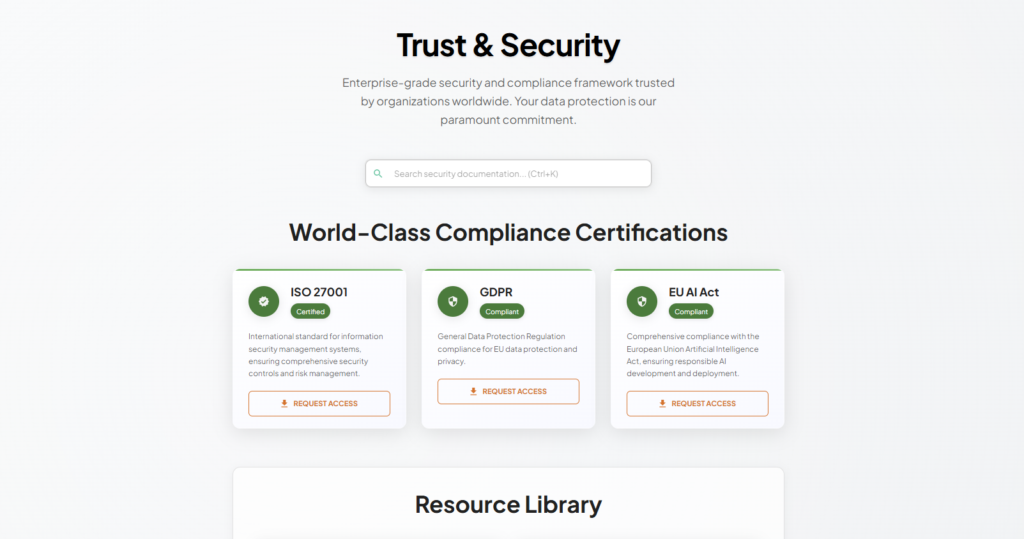
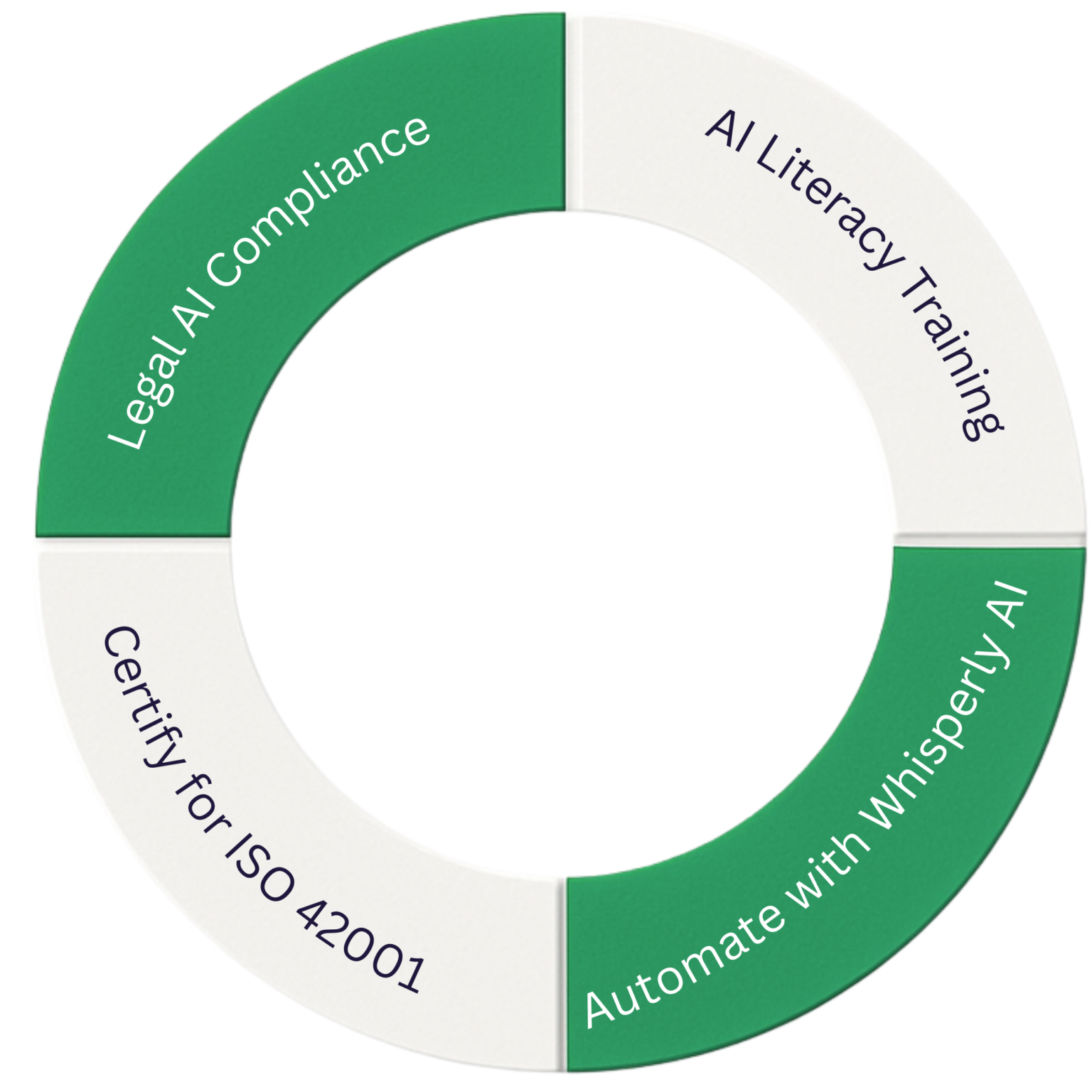
We combine deep legal expertise with operational and technical tools to cover the full AI lifecycle. Our legal team interprets regulations, drafts contracts, and designs governance frameworks, while our partner platform automates compliance tracking and vendor assessments, making your organization “EU AI Act–ready” and aligned with international best practices.
For executives, we focus on strategic risks, governance structures, and regulatory obligations, empowering leadership to make informed decisions. For employees, training emphasizes safe day-to-day use, prevention of “shadow AI,” awareness of internal policies, and hands-on workshops. Both tracks provide certifications and practical knowledge that help embed responsible AI across your organization.
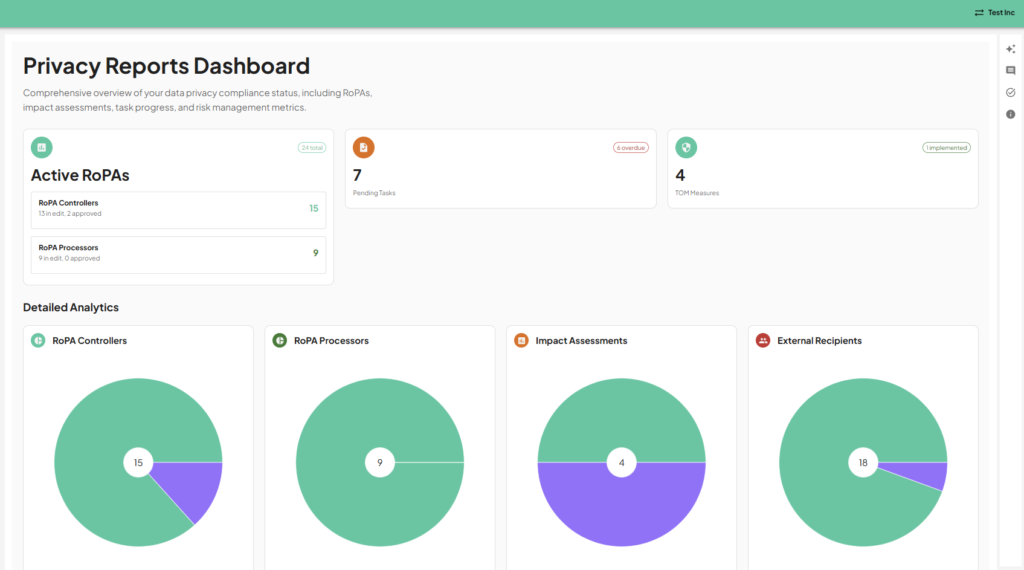
We translate legal requirements into concrete business processes. That includes setting up AI system inventories, impact assessments, incident reporting databases, and technical documentation (such as model evaluation logs and governance approvals). This creates a “single source of truth” across teams, replacing ad hoc documents and siloed knowledge.
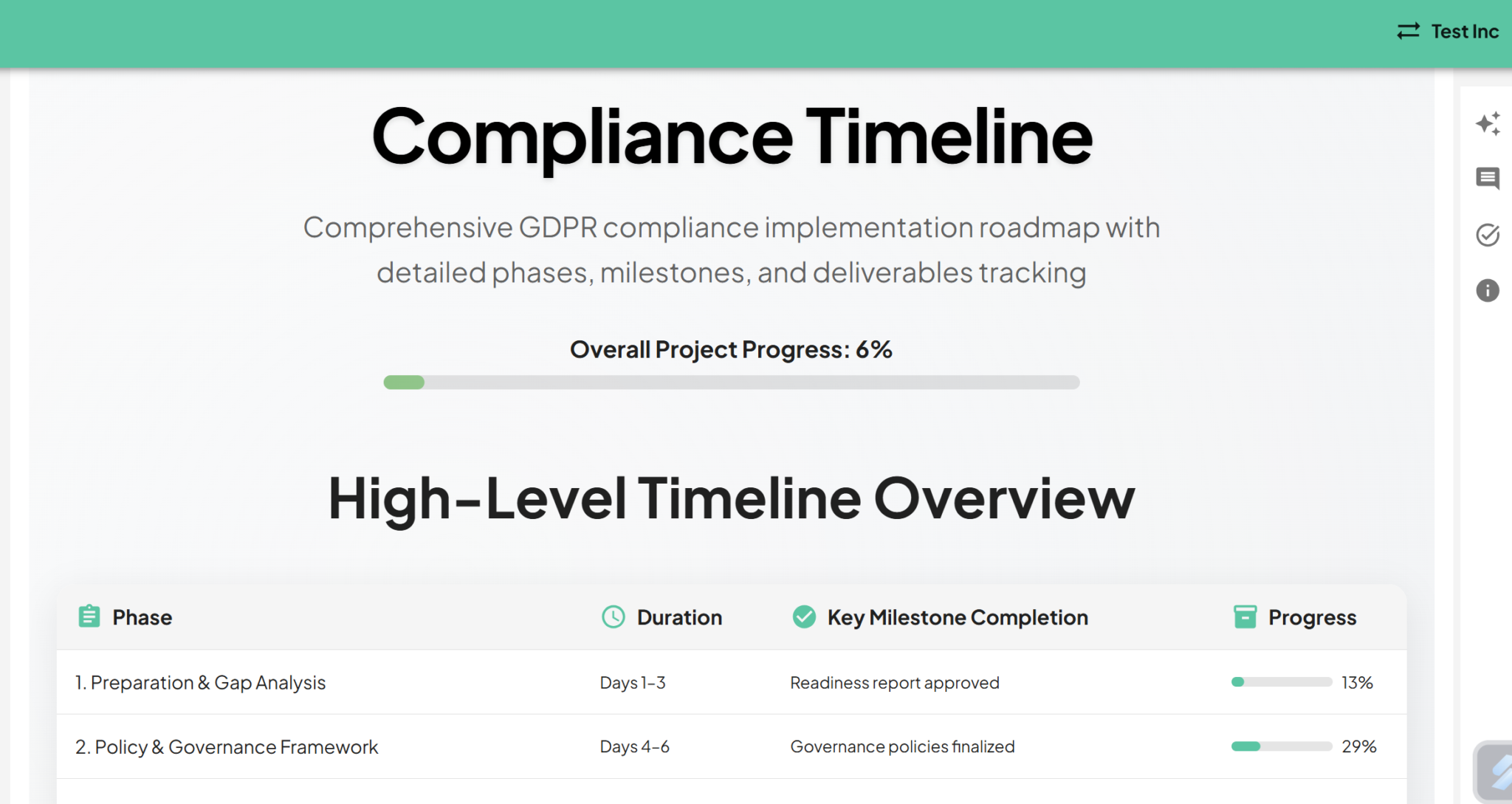
Yes. Through our partnership with Whisperly, we deploy governance and vendor-risk platforms that automate critical tasks like risk assessments, security monitoring, documentation, and remediation workflows. This allows compliance to be continuous, and not one-off, reducing overhead and ensuring transparency across your AI supply chain.

03/11/2025

03/11/2025

03/11/2025

03/11/2025

17/09/2025

24/12/2024
itlawaficionado
privacywhisperer
cryptobuddy
evergreen
Subscribe to the latest legal updates, offering practical insights you need to support and accelerate your business.